Barefoot Bay, FL · Brevard County
Basement Water Removal in Barefoot Bay, FLBasement Wall Drying & Basement Dehumidification
Basement Water Removal in Barefoot Bay runs from basement water pump out and basement drying services to basement dehumidification.
Answered 24/7
Basement Water Removal Solutions for Barefoot Bay Homeowners
A basement that looks dry a day after a flood in Barefoot Bay can still hold a lot of water in the slab, the bottom of the walls and under flooring. That hidden water causes the musty smell many basements have.
Few homes in Barefoot Bay have basements, so this work usually covers the lowest part of a home: a sunken room, a below-grade garage, a utility room or a crawl space.
Homes in Barefoot Bay and nearby Micco, Roseland and Sebastian with basements face storm seepage, sewer backups and plumbing leaks. Help with basement water removal covers pump-out, wall and floor drying and dehumidification.
The Basement Water Removal Process in Barefoot Bay
Basement Wall Drying
Concrete and block walls dry with directed airflow and dehumidification, which pull water out of the masonry.
Basement Dehumidification
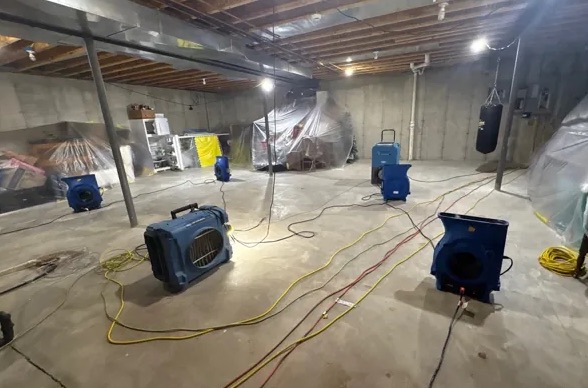
Dehumidifiers run continuously during drying, and their output is checked to track how much water is still coming out of the materials.
Basement Drying Services
Drying plans for basements account for cool air and thick concrete, which hold moisture longer than upper floors.
Basement Moisture Inspection
An inspection shows how high water wicked up the walls and how far it spread under flooring, which sets the drying plan.
Basement Floor Water Damage
Water on a basement floor soaks into carpet pad, laminate seams and the concrete itself. Floor coverings are lifted where needed so the slab can dry.
Indicators You Need Professional Water Removal
Gurgling Sounds From Drains
Gurgling floor drains or slow drains can be an early sign of a sewer line problem.
Soggy or Wet Carpeting
Carpet that feels damp or smells sour is holding water in the pad against the concrete.
Water Stains on Walls or Ceiling
Stains on lower walls or the ceiling below a bathroom or kitchen point to a leak.
Wet or Damp Basement Walls
Basement walls that look dark, feel damp or show tide lines are taking on or holding water.
How Basement Water Removal Works in Barefoot Bay
Step 1: Source Control and Water Pump Out
The leak is shut off and standing water is pumped out, starting at the lowest point.
Step 2: Water Extraction
Extractors pull water from carpet, pad and concrete, and wet vacs clear corners and stairs.
Step 3: Dehumidification and Drying
Large dehumidifiers and air movers dry walls, framing and slab over several days.
Step 4: Inspection and Clearance for Repair
Final readings confirm the basement is dry and ready for drywall and flooring repairs.
Sources of Basement Water Problems
Improper Landscape Grading
Soil that slopes toward the house directs rainwater straight to the basement walls.
Foundation Cracks and Seepage
Cracks in foundation walls and the slab let groundwater seep in during wet weather.
Heavy Rainfall and Storm Flooding
Heavy rain saturates the soil and pushes water through walls, cracks and the floor joint.
Clogged or Damaged Gutters
Clogged gutters and short downspouts dump roof water right next to the foundation.
Both Residential & Commercial Basement Water Removal
Residential Basement Water Removal
In homes, a wet basement often means damaged carpet, drywall and stored belongings, plus a furnace or water heater sitting in water. Water is pumped out and the space dried.
Commercial Basement Water Removal
In commercial buildings, basements often house mechanical rooms and storage. Water is removed quickly so systems can be checked and restarted safely.
When to Hire Local Pros for Basement Water Removal
A small puddle on bare concrete can be handled with a wet vac, towels and a dehumidifier. Call local basement water removal pros if water reached carpet, drywall or framing, or covers much of the floor.
Factors Affecting Basement Water Removal Cost
Sewage cleanup, finished walls, after-hours calls and damaged appliances all add to the total for basement water removal in Barefoot Bay.
Affected Materials
Finished walls, carpet and laminate take more removal work than bare concrete.
Access and Complexity
Narrow stairs, low ceilings and crowded storage areas make the work slower and longer.
Contamination Level
Sewage or dirty water needs protective gear, removal and disinfection, which costs more.
Does Insurance Cover Basement Water Removal?
Photograph the water level, damaged belongings and appliances before cleanup, and keep receipts for emergency pumping and drying equipment for your adjuster.
The Value of Professional Basement Water Removal
Clear Communication
You get plain updates on what was found, what was removed and how drying is going.
Moisture Inspection
Meters and thermal cameras find water in walls, floors and slab that looks dry.
Methodical Water Removal Process
Water is removed in a set order: pump-out, extraction, removal of soaked materials, then drying.
Round-the-Clock Basement Water Removal for Barefoot Bay
If water is near outlets, the furnace or the electrical panel, stay out of it. Call (772) 758-7923 for help in Barefoot Bay and wait for power to be made safe.
Call Now (772) 758-7923Basement Water Removal Serving Barefoot Bay and Surroundings
Besides Barefoot Bay, local basement water removal pros handle basement pump-outs, wall drying and dehumidification in nearby Micco, Roseland and Sebastian.
Common Basement Water Removal Questions Answered
How does a basement moisture inspection work?
Moisture meters and thermal cameras check walls, floors and the slab, including behind finished walls and under flooring.
What is the difference between a pump out and extraction?
A pump out removes deep standing water. Extraction pulls the remaining water from carpet, pad and floors.
How is contaminated water handled in a basement?
With protective gear, containment, removal of porous materials and disinfection of hard surfaces before drying.
What causes basement floor water damage?
Storm seepage, burst pipes, appliance leaks, foundation cracks and sewer backups through floor drains are the usual sources.
Can wet drywall in a basement be saved?
Sometimes, if the water was clean and removed quickly. Soaked or contaminated drywall is cut out above the water line.