Indiantown, FL · Martin County
Basement Water Removal in Indiantown, FLBasement Wall Drying & Basement Dehumidification
Homeowners in Indiantown get Basement Water Removal for basement floor water damage, basement water pump out and basement moisture inspection.
Answered 24/7
Local Basement Water Removal Services for Indiantown
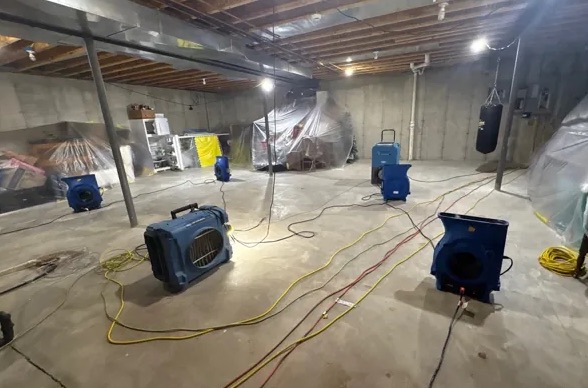
Dehumidification is the slow but necessary part of basement water removal in Indiantown. Pumps remove standing water quickly, but walls and concrete keep releasing moisture for days.
Few homes in Indiantown have basements, so this work usually covers the lowest part of a home: a sunken room, a below-grade garage, a utility room or a crawl space.
A single storm or burst pipe in Indiantown can flood a basement. Local basement drying experts serve Indiantown and nearby Palm City, Canal Point and Stuart, with help available around the clock.
Professional Basement Water Removal Offerings
Basement Wall Drying
Opening the bottom of finished walls lets air reach the studs and sill plate, which otherwise stay wet behind the drywall.
Basement Dehumidification
After drying, a household dehumidifier may still be needed to keep basement humidity in a healthy range.
Basement Moisture Inspection
Readings are recorded at each visit, giving you and your insurer a clear record of the drying.
Basement Floor Water Damage
Flooring that buckled or swelled is removed. Tile and sealed concrete can often be cleaned and dried in place.
Basement Drying Services
After pumping, air movers and dehumidifiers dry the walls, framing and slab. Readings are taken daily until every surface is back to normal.
Common Symptoms Requiring Basement Water Removal
Musty Odors and Mold Smell
A musty or damp smell in the basement points to wet materials hidden somewhere in the space.
Rusted Appliances or Furniture
Rust on appliance bases, furniture legs or metal shelving points to standing water or long-term dampness.
Wet or Damp Basement Walls
Basement walls that look dark, feel damp or show tide lines are taking on or holding water.
Efflorescence on Concrete Walls
White, powdery deposits on concrete walls mean water is passing through the masonry.
How Basement Water Removal Works in Indiantown
Step 1: Emergency Water Extraction
Power is made safe, then pumps and extractors remove standing water from the basement floor.
Step 2: Detailed Moisture Inspection
Meters map wet walls, framing and slab areas, including behind finished walls and under flooring.
Step 3: Drying and Dehumidification
Air movers and large dehumidifiers run continuously, with readings checked every day.
Step 4: Final Verification and Monitoring
Readings are compared to dry areas, and equipment is removed only when the basement tests dry.
Sources of Basement Water Problems
Appliance Malfunctions and Overflows
Washers, utility sinks and water softeners in the basement can overflow or leak.
Clogged or Damaged Gutters
Clogged gutters and short downspouts dump roof water right next to the foundation.
Foundation Cracks and Seepage
Cracks in foundation walls and the slab let groundwater seep in during wet weather.
Plumbing Leaks or Pipe Bursts
Supply lines, drain pipes and water heaters in the basement can leak or burst onto the floor.
Residential and Commercial Basement Water Removal in Indiantown
Residential Basement Water Removal
Older homes with a basement may see seepage with every heavy storm. Water removal handles the current damage, and the entry point is noted for a waterproofing contractor.
Commercial Basement Water Removal
Multi-unit buildings with shared basements need each storage and laundry area pumped, dried and documented for the property manager.
Basement Water Removal vs. DIY: When to Call the Pros
Fans by themselves can spread damp basement air through the rest of the house. Basement drying needs dehumidifiers that pull moisture out of both the air and the concrete.
What Influences the Price of Basement Water Removal
The pros look at water depth, water type and basement finishes before pricing basement water removal in Indiantown, then explain the scope.
Additional Services
Antimicrobial treatment, contents cleaning and repairs after drying add to the cost.
Water Depth and Volume
Deeper water takes more pumping time and usually means more materials got wet.
Contamination Level
Sewage or dirty water needs protective gear, removal and disinfection, which costs more.
Does Insurance Cover Basement Water Removal?
Many homeowner policies cover sudden basement water from a burst pipe but not groundwater seepage. Sewer backup coverage is often an add-on, so check yours.
Benefits of Hiring Local Pros for Basement Water Removal in Indiantown
Moisture Inspection
Meters and thermal cameras find water in walls, floors and slab that looks dry.
Methodical Water Removal Process
Water is removed in a set order: pump-out, extraction, removal of soaked materials, then drying.
Industry Drying Standards
Water removal and drying follow industry water damage standards, with readings at every visit.
24/7 Emergency Basement Water Removal in Indiantown
Storm night, weekend or holiday, local basement drying experts handle basement water in Indiantown. Call (772) 758-7923 to get pumps running and drying started.
Call Now (772) 758-7923Basement Water Removal Near Indiantown: Areas Served
Help with basement water removal reaches Palm City, Canal Point and Stuart, plus other communities around Indiantown, for finished and unfinished basements alike.
- Basement Water Removal in Palm City
- Basement Water Removal in Canal Point
- Basement Water Removal in Stuart
- Basement Water Removal in North River Shores
- Basement Water Removal in Jupiter Farms
- Basement Water Removal in Port Salerno
- Basement Water Removal in Rio
- Basement Water Removal in River Park
- Emergency Damage Restoration in 34956
- Storm Damage Restoration in 34956
- Water Damage Restoration in 34956
- Water Extraction Service in 34956
- Water Leak Detection in 34956
- Water Removal Service in 34956
Basement Water Removal in Indiantown: Your Questions
What is involved in basement water removal?
Making power safe, pumping out standing water, extracting floors and carpet, removing soaked materials and dehumidifying until dry.
How is contaminated water handled in a basement?
With protective gear, containment, removal of porous materials and disinfection of hard surfaces before drying.
How does a basement moisture inspection work?
Moisture meters and thermal cameras check walls, floors and the slab, including behind finished walls and under flooring.
What causes basement floor water damage?
Storm seepage, burst pipes, appliance leaks, foundation cracks and sewer backups through floor drains are the usual sources.
What is the difference between a pump out and extraction?
A pump out removes deep standing water. Extraction pulls the remaining water from carpet, pad and floors.