Stuart, FL · Martin County
Basement Water Damage Restoration in Stuart, FLBasement Sewer Backup Cleanup & Basement Drying Services
Basement Water Damage Restoration in Stuart runs from basement water extraction and basement floor water removal to basement dehumidification.
Answered 24/7
Basement Water Damage Restoration Solutions in Stuart, Florida
Basements collect water from every direction: rain seeping through walls, groundwater pushing up through the slab, sewage backing up through floor drains and pipes bursting overhead. In a Stuart home with a basement or below-grade room, any of these can leave inches of water on the floor.
Basements are uncommon in Stuart. The same extraction and drying steps apply to slab-level rooms, sunken dens and garages that take on water.
A finished basement or lower level in Stuart or North River Shores, Rio and Palm City can hide old moisture behind drywall and flooring. The pros find the water and dry the space before more damage sets in.
The Basement Water Damage Restoration Process in Stuart
Basement Sewer Backup Cleanup
After a sewer backup, cleanup and disinfection come before drying, so contaminated surfaces are not left in place.
Basement Drying Services
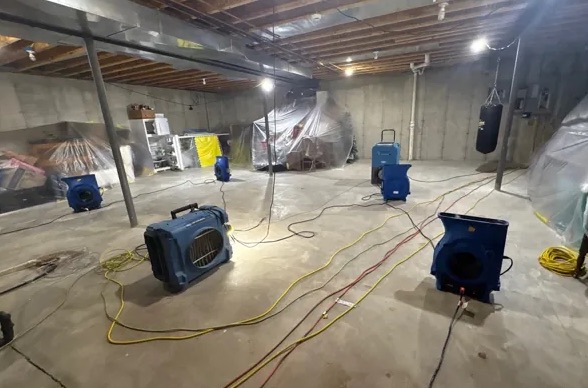
Air movers and dehumidifiers are placed to dry walls, framing and the slab. Below-grade rooms dry slowly, so readings are taken daily.
Basement Wall Drying
Finished basement walls hide wet insulation and framing. Removing the bottom of the drywall lets air reach the cavity.
Basement Mold Prevention
After drying, an antimicrobial can be applied to framing and concrete that were wet, to slow mold on surfaces that stay in place.
Basement Water Extraction
Basement water is removed before drying starts, because every gallon left behind keeps the walls and air damp.
Indicators for Basement Water Damage Restoration in Stuart
Standing Water in the Basement
Any standing water on the basement floor needs pumping right away, before it soaks walls and framing.
High Humidity Levels Below-Grade
A basement that stays damp and clammy even on dry days has a moisture source that needs attention.
Mold on Surfaces
Dark spots on drywall, framing or stored boxes mean the area has stayed wet for days.
Rusted Appliances or Pipes
Rust on the water heater, furnace base or pipes points to repeated moisture or past flooding.
How Basement Water Damage Restoration Works in Stuart
Step 1: Initial Assessment and Water Removal
The source and type of water are identified, and standing water is removed right away.
Step 2: Focused Drying of Materials
Walls, framing and the slab are dried with directed airflow, with wet insulation removed.
Step 3: Air Quality Management
Air scrubbers filter dust and odors from removal work while drying continues.
Step 4: Documentation for Restoration
Photos, readings and a list of removed materials are prepared for insurance and rebuilding.
Why Basement Water Damage Occurs in Stuart
Failed or Clogged Drain Tile
Clogged or collapsed drain tile around the foundation lets water build up against the walls.
Clogged Floor Drains
A floor drain blocked by debris cannot carry off water from a leak or overflow, so it spreads across the basement floor.
HVAC Condensate Line Overflow
A clogged furnace or air conditioner condensate line can overflow onto the floor of a basement or lower-level utility room.
Window Well Flooding
Window wells without drains or covers fill with rain and leak through basement windows.
Basement Water Damage Restoration for All Properties in Stuart
Residential Basement Water Damage Restoration
Homeowners with older basements may have seepage that returns with each storm. Drying fixes the current damage, and the source is noted for a waterproofing contractor.
Commercial Basement Water Damage Restoration
Apartment and condo buildings with shared basements or lower levels may have laundry and storage below grade. Each area is extracted, dried and recorded for the building manager.
DIY vs. Professional Basement Water Damage Restoration in Stuart
Fans alone can push damp air into the rest of the house. Basement drying needs dehumidifiers to pull the moisture out of the air and the concrete.
Basement Water Damage Restoration Cost in Stuart, FL
Sewage cleanup, finished walls, storm-night calls and damaged appliances all add to the total for basement water damage restoration in Stuart.
Emergency Service
Night, weekend and storm calls can cost more than a scheduled visit.
Dehumidification Needs
Large dehumidifiers may need to run longer in below-grade spaces than in upper floors.
Secondary Damage
Damage to furnaces, water heaters and belongings adds repair and replacement costs.
Does Insurance Cover Basement Water Damage Restoration?
Photograph the water level, damaged belongings and appliances before cleanup starts, and keep receipts for emergency pumping and drying to send to your insurer.
Advantages of Hiring Local Pros in Stuart for Basement Water Damage Restoration
Containment Strategies
Plastic sheeting keeps contaminated areas separate from clean parts of the house.
Mold Prevention Focus
Fast drying is the main way to limit microbial growth in a below-grade space.
24/7 Emergency Response
Help is available day or night when water is rising in the basement.
24/7 Emergency Basement Water Damage Restoration in Stuart
Water rising in your basement in Stuart? Shut off power to the basement if it is safe, move what you can and call (772) 758-7923. Help is available 24/7.
Call Now (772) 758-7923Local Basement Water Damage Restoration Coverage: Stuart and Beyond
Need basement water damage restoration outside Stuart? Service also covers North River Shores, Rio and Palm City, including emergency help during storms.
- Basement Water Damage Restoration in North River Shores
- Basement Water Damage Restoration in Rio
- Basement Water Damage Restoration in Palm City
- Basement Water Damage Restoration in Jensen Beach
- Basement Water Damage Restoration in Sewall's Point
- Basement Water Damage Restoration in Port Salerno
- Basement Water Damage Restoration in Ocean Breeze
- Basement Water Damage Restoration in Hobe Sound
- Emergency Damage Restoration in 34994
- Storm Damage Restoration in 34994
- Water Damage Restoration in 34994
- Water Extraction Service in 34994
- Water Leak Detection in 34994
- Water Removal Service in 34994
- Emergency Damage Restoration in 34995
- Storm Damage Restoration in 34995
Frequently Asked Questions About Basement Water Damage Restoration
What is involved in basement water damage restoration?
Pumping out water, removing soaked materials, cleaning contaminated areas, drying walls, framing and concrete, and dehumidifying until readings are normal.
What are signs of hidden moisture after below-grade water extraction?
Musty smells, tide lines on walls, damp carpet edges and moisture readings that stay high in walls or the slab.
Does basement mold prevention need special steps after flooding?
Fast drying is the main step. Wood and concrete that stayed wet can be treated with an antimicrobial once dry.
How is basement restoration documented for insurance?
With photos of the water level and damage, moisture readings, a list of removed materials and daily drying logs.
Should I try below-grade waterproofing myself after flooding?
Sealing a small crack can be a DIY job, but drying must come first, and larger waterproofing work should go to a contractor.